
Halal Cosmetics Market Size to Reach USD 143.02 Billion by 2034, Expanding at 11.67% CAGR (2026–2034)
Halal Cosmetics Market Size 1
Halal Cosmetics Market Share 1
Key companies covered in halal cosmetics market report are Ivy Beauty Corporation Sdn Bhd, Iba Cosmetics, Talent Cosmetics, Clara International Beauty Group.
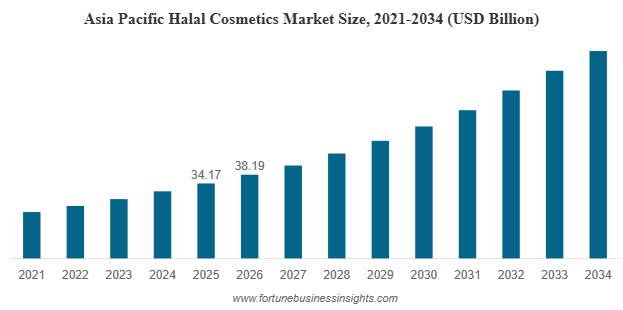
NY, UNITED STATES, February 3, 2026 /EINPresswire.com/ -- The global halal cosmetics market size was valued at USD 53.12 billion in 2025 and is projected to be worth USD 59.14 billion in 2026 and reach USD 143.02 billion by 2034, exhibiting a CAGR of 11.67% during the forecast period. Asia Pacific dominated the halal cosmetics market with a market share of 64.32% in 2025.The global Halal Cosmetics Market is witnessing strong and sustained growth as consumers across regions increasingly prioritize ethical, safe, and certified beauty products. Halal cosmetics are manufactured under strict guidelines that prohibit the use of alcohol, animal-derived fats, and other non-permissible ingredients, while emphasizing hygiene, safety, and ethical sourcing throughout the production process. Once viewed primarily as a niche segment serving religious needs, halal cosmetics have evolved into a mainstream category, attracting a broader audience seeking clean-label, cruelty-free, and high-quality personal care products. Rising consumer awareness regarding ingredient transparency, skin health, and long-term product safety continues to drive demand, positioning halal cosmetics as an important and fast-expanding segment within the global beauty and personal care industry.
Get a Free Sample PDF: https://www.fortunebusinessinsights.com/enquiry/request-sample-pdf/halal-cosmetics-market-106602
Key Market Drivers:
Rising Demand for Ethical and Safe Beauty Products
• Increasing consumer awareness regarding harmful chemicals in cosmetics is driving demand for safer formulations.
• Halal cosmetics appeal to health-conscious consumers due to strict ingredient screening and controlled production processes.
• Concerns related to skin sensitivity, allergies, and product safety are accelerating adoption.
• Growing preference for cruelty-free and environmentally responsible beauty products further supports market growth.
Expanding Global Muslim Population
• The growing Muslim population worldwide plays a critical role in driving halal cosmetics consumption.
• Halal-certified beauty products align seamlessly with daily lifestyle requirements in Muslim-majority regions.
• Rising disposable incomes, urbanization, and beauty awareness are reinforcing demand in these markets.
Broadening Appeal Beyond Religious Boundaries
• Non-Muslim consumers increasingly view halal cosmetics as clean, ethical, and high-quality products.
• Halal certification is becoming a symbol of product authenticity and transparency rather than a purely religious marker.
• This expanding consumer base significantly enhances global market penetration.
Product Innovation and Industry Developments:
• Manufacturers are investing heavily in research and development to create innovative halal-certified cosmetic formulations.
• New product launches increasingly feature plant-based, organic, and dermatologically tested ingredients.
• Enhanced texture, performance, and shelf life have improved the competitiveness of halal cosmetics compared to conventional products.
• Packaging innovation and sustainable materials are gaining attention as brands respond to environmental concerns.
• Digital engagement and influencer-led promotions are boosting brand visibility and consumer education.
Speak To Analyst: https://www.fortunebusinessinsights.com/enquiry/speak-to-analyst/halal-cosmetics-market-106602?utm_medium=pie
Market Segmentation Insights:
By Product Type
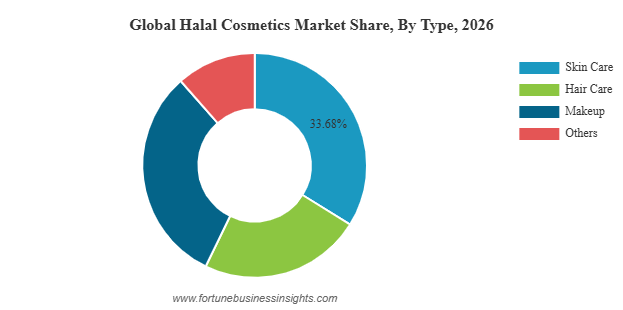
• The market includes skin care, hair care, makeup, and other cosmetic products.
• Skin care accounts for the largest share due to daily usage, high awareness, and preventive skincare routines.
• Products such as moisturizers, cleansers, serums, and sunscreens show strong demand.
• Hair care products are gaining momentum as consumers seek safe shampoos, conditioners, and styling products.
• The makeup segment is expanding rapidly with growing availability of halal-certified color cosmetics.
By Distribution Channel
• Halal cosmetics are sold through offline retail stores and online sales channels.
• Offline channels remain important due to consumer preference for product trials and in-person consultations.
• Specialty stores and organized retail outlets contribute significantly to sales volumes.
• Online channels are witnessing faster growth due to convenience, expanding e-commerce platforms, and digital marketing strategies.
• Social media and direct-to-consumer platforms are particularly influential among younger buyers.
Regional Outlook:
• Asia Pacific dominates the halal cosmetics market due to large populations, cultural acceptance, and expanding retail infrastructure.
• Countries such as India, Indonesia, and Malaysia are major contributors, supported by rising middle-class populations and local manufacturing.
• Government-backed halal certification frameworks strengthen regional leadership.
• The Middle East remains a strong market driven by lifestyle compatibility and high purchasing power.
• North America and Europe are emerging growth regions as consumers adopt ethical, vegan-friendly, and cruelty-free cosmetics.
• In these regions, halal cosmetics appeal largely to conscious consumers seeking safer alternatives.
• Africa and South America present untapped opportunities supported by increasing urbanization and awareness.
Competitive Landscape:
• The halal cosmetics market includes a mix of regional specialists and global beauty companies.
• Market participants focus on certification, innovation, and geographical expansion to strengthen brand presence.
• Strategic partnerships, retail expansions, and online sales channels support competitive positioning.
• Continuous product differentiation remains essential for long-term growth.
𝐁𝐫𝐨𝐰𝐬𝐞 𝐃𝐞𝐭𝐚𝐢𝐥𝐞𝐝 𝐒𝐮𝐦𝐦𝐚𝐫𝐲 𝐨𝐟 𝐑𝐞𝐬𝐞𝐚𝐫𝐜𝐡 𝐑𝐞𝐩𝐨𝐫𝐭 𝐰𝐢𝐭𝐡 𝐓𝐎𝐂: https://www.fortunebusinessinsights.com/toc/halal-cosmetics-market-106602
Future Outlook:
• The global halal cosmetics market is expected to maintain strong momentum throughout the forecast period.
• Advancements in formulation science and sustainable packaging will further enhance market attractiveness.
• As consumers increasingly seek safe, inclusive, and ethically produced beauty solutions, halal cosmetics are positioned for long-term success.
• The market is set to play a pivotal role in shaping the future of the global personal care and beauty industry.
List of Top Companies:
• Ivy Beauty Corporation Sdn Bhd (Malaysia)
• Iba Cosmetics (India)
• Talent Cosmetics (South Korea)
• Clara International Beauty Group (Malaysia)
• Kao Corporation (Japan)
• Amara Halal Cosmetics (U.S.)
• INIKA Organic (Australia)
• Elaheh Halal Cosmetics Inc. (U.S.)
• Flora & Noor (U.S.)
Key Industry Developments:
• April 2023: NUME-Lab, a Swiss-based halal skincare brand, announced its strategy to target South East Asian markets such as Singapore, Malaysia, and Hong Kong. NUME-Lab specializes in cleansers, face creams (face care products), night serums, and eye serums. The company plans on setting up operations in these Asian countries through distributorships in the near term.
• November 2022: Iba Cosmetics, an India-based company, partnered with Believe, a Singaporean FMCG conglomerate specializing in personal care essentials. Through this collaboration, the latter invested USD 10 million in Iba Cosmetics to expand its retail market space in Saudi Arabia, UAE, Bahrain, Bangladesh, and other countries.
Related Reports-
Color Cosmetics Market
Cosmetics Market
Ashwin Arora
Fortune Business Insights™ Pvt. Ltd.
+18339092966 ext.
email us here
Legal Disclaimer:
EIN Presswire provides this news content "as is" without warranty of any kind. We do not accept any responsibility or liability for the accuracy, content, images, videos, licenses, completeness, legality, or reliability of the information contained in this article. If you have any complaints or copyright issues related to this article, kindly contact the author above.
